
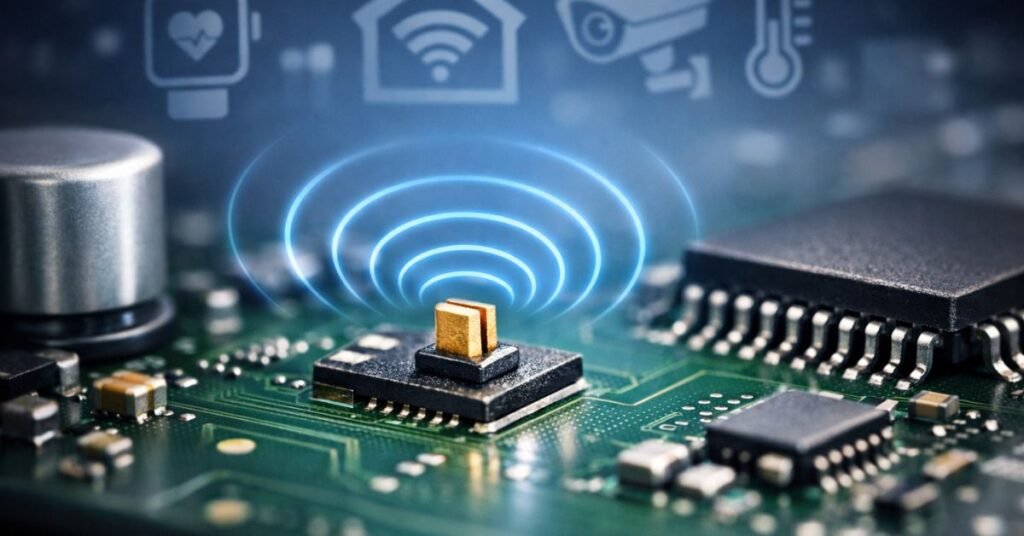
Have you ever wondered why your Wi-Fi signal suddenly improves when you plug in a small external antenna—or why your car radio works better after replacing a short rod on the roof? A few years ago, while setting up a temporary home office in a signal-dead apartment, I fixed weeks of connection frustration with a device smaller than my thumb. That device was an antennino.
If you’ve heard the term but never really understood what it means—or you’ve used one without realizing its full potential—you’re not alone. In this in-depth guide, I’ll break down what an antennino is, how it works in real life, when it’s worth using, and when it’s not. You’ll also learn practical tips from hands-on experience, not theory or marketing fluff.
By the end, you’ll know exactly whether an antennino can solve your problem—and how to use it properly if it can.
What Is an Antennino? (Simple Explanation for Beginners)
At its core, an antennino is a small antenna designed to transmit, receive, or improve wireless signals. The word comes from Italian, where antenna means antenna and -ino is a diminutive suffix—so it literally means “little antenna.”
In practice, the term is commonly used to describe:
- Compact Wi-Fi antennas
- USB Wi-Fi antenna adapters
- Small RF antennas used in cars, routers, IoT devices, or radios
- External signal boosters attached to electronic devices
A Simple Analogy
Think of wireless signals like sound waves in a room.
- A device without a good antenna is like someone whispering with their face turned away.
- A device with an antennino is like that same person speaking clearly and facing the room.
The information (data) is the same—but how well it travels makes all the difference.
Why Antennini Exist
Modern devices are getting:
- Smaller
- Thinner
- More compact
That’s great for design, but terrible for antennas. Internal antennas are often weak or poorly positioned. An antennino exists to fix that compromise—by giving signals a better way in and out.
Where You’ll Commonly See an Antennino
From real-world usage, I’ve encountered antennini in:
- Wi-Fi routers and extenders
- USB Wi-Fi adapters for PCs and laptops
- Car radios and GPS systems
- Smart home devices (IoT sensors, cameras)
- Radio transmitters and receivers
- Industrial and security equipment
In short, if something communicates wirelessly, an antennino is often involved—even if it’s hidden.
How an Antennino Works (Without the Engineering Headache)
Let’s keep this practical.
An antennino works by converting electrical signals into electromagnetic waves—and back again. That’s it. But the way it does this determines how effective it is.
The Key Factors That Matter
From years of testing different setups, these are the real performance drivers:
1. Frequency Compatibility
Antennini are tuned for specific frequencies:
- 2.4 GHz (common Wi-Fi, Bluetooth)
- 5 GHz (modern Wi-Fi)
- LTE, GSM, GPS, RF bands
Using the wrong frequency antenna is like using the wrong key—it won’t work properly.
2. Gain (Measured in dBi)
Gain determines how focused the signal is.
- Low gain = wider coverage, shorter range
- High gain = longer range, narrower focus
Higher isn’t always better. I’ve seen people worsen their signal by choosing too much gain.
3. Placement and Orientation
This matters more than most people realize.
A perfectly good antennino placed poorly can perform worse than a cheap one placed correctly.
4. Connection Type
SMA, RP-SMA, USB, internal soldered connections—all affect compatibility and signal loss.
Benefits and Real-World Use Cases of an Antennino
Practical Benefits You’ll Actually Notice
Based on hands-on use, these are the real benefits—not marketing promises:
- Stronger and more stable wireless connections
- Reduced signal drops
- Better coverage through walls and floors
- Improved data speeds (when signal was the bottleneck)
- More reliable device communication
Real-World Use Cases
1. Fixing Weak Wi-Fi on a Desktop PC
Many desktops have terrible internal Wi-Fi antennas. A USB Wi-Fi antennino can instantly fix this.
2. Improving Router Coverage
External antennini on routers often outperform internal ones—especially in large homes.
3. Car Radio and GPS Reception
A small replacement antennino can dramatically improve clarity and satellite lock.
4. IoT and Smart Devices
Sensors placed far from the hub often need a better antenna to stay connected.
5. Temporary or Mobile Setups
For travel, events, or remote work, antennini provide flexible signal improvement.
Who Should Use an Antennino?
Best for:
- People with weak or unstable wireless signals
- Home offices and remote workers
- Gamers needing stable connections
- Smart home users
- DIY tech enthusiasts
Not ideal for:
- Situations where bandwidth (not signal) is the problem
- Environments with heavy interference you can’t control
- Users unwilling to test placement or settings
Step-by-Step: How to Choose and Use an Antennino Properly
This is where most people go wrong. Follow this process and you’ll avoid 90% of problems.
Step 1: Identify the Problem Clearly
Ask yourself:
- Is the signal weak or unstable?
- Is speed slow only when signal bars drop?
- Does moving closer help?
If yes → an antennino may help.
Step 2: Confirm Frequency and Device Compatibility
Check:
- Wi-Fi standard (2.4 GHz, 5 GHz, both)
- Connector type or USB support
- Operating system compatibility (for USB adapters)
Step 3: Choose the Right Gain
General rule:
- Small room → 2–5 dBi
- Medium home → 5–8 dBi
- Long distance → 8–12 dBi
Avoid extreme gain unless you know what you’re doing.
Step 4: Install and Position Correctly
From experience:
- Keep it away from metal surfaces
- Position vertically unless specified otherwise
- Test multiple angles and locations
Step 5: Test and Optimize
Use:
- Speed tests
- Signal strength tools
- Real usage (video calls, downloads)
Fine-tune placement before assuming it doesn’t work.
Tools, Comparisons, and Expert Recommendations
USB Antennino vs Built-In Antennas
USB Antennino – Pros
- Easy installation
- Portable
- Often stronger than built-in antennas
Cons
- Driver dependency
- Can be knocked or damaged
External Router Antennino vs Internal
External – Pros
- Adjustable orientation
- Better signal shaping
Cons
- Aesthetic compromise
- Slightly more exposed
Free vs Paid Options
Cheap Options
- Good for basic fixes
- Inconsistent quality
Mid-Range (Best Value)
- Balanced gain
- Reliable performance
High-End
- Specialized use cases
- Not necessary for most homes
My Practical Recommendation
In most real-world scenarios, a mid-range antennino with proper placement beats an expensive one used poorly.
Common Antennino Mistakes (and How to Fix Them)
Mistake 1: Choosing Maximum Gain Automatically
Fix: Match gain to environment, not distance fantasies.
Mistake 2: Ignoring Interference
Fix: Change channels and avoid crowded frequencies.
Mistake 3: Poor Placement
Fix: Test multiple positions—don’t assume.
Mistake 4: Wrong Frequency
Fix: Always verify device specs.
Mistake 5: Expecting Magic
Fix: Antennini improve signal—not internet plans or server speeds.
Conclusion: Why the Antennino Is Small but Powerful
The antennino is one of the most underestimated pieces of technology in modern wireless communication. It doesn’t look impressive. It doesn’t come with flashy software. But when used correctly, it quietly fixes problems that frustrate people for months.
From home offices to smart homes, from cars to computers, a properly chosen and positioned antennino can mean the difference between constant frustration and smooth, reliable connectivity.
If you’re dealing with weak signals, don’t upgrade everything blindly. Start small. Start smart. Sometimes, the smallest component makes the biggest difference.
If you’ve used an antennino—or are considering one—feel free to share your experience or questions. Real-world setups are where the best insights come from.
Frequently Asked Questions (FAQs)
What exactly does an antennino do?
An antennino improves the transmission and reception of wireless signals by providing a better physical interface for electromagnetic waves.
Is an antennino the same as a Wi-Fi booster?
No. An antennino improves signal quality at the device level, while a booster amplifies or repeats signals.
Can an antennino increase internet speed?
Indirectly, yes—if weak signal was limiting speed. It won’t exceed your plan’s limits.
Does antennino placement really matter?
Absolutely. Placement often matters more than price or brand.
Are USB antennini safe to use?
Yes, when purchased from reputable manufacturers and used correctly.
Can I use one antennino for all devices?
No. Compatibility depends on frequency, connector type, and device support.
Is higher dBi always better?
No. Higher gain narrows signal direction and can worsen coverage in some setups.
Do laptops benefit from external antennini?
Often yes, especially older models with weak internal antennas.
Can an antennino fix dropped connections?
In many cases, yes—especially when drops are caused by weak or unstable signal.
Is installing an antennino difficult?
Most modern antennini are plug-and-play or require minimal setup.